A Cambridge-i Egyetemen több magyar származású vagy Magyarországhoz szorosan kötődő kutató dolgozott és dolgozik a természettudományok, a műszaki tudományok, a mesterséges intelligencia, a történelem és más tudományterületek metszéspontjain. Közülük Gábor Csányi a számításos kémiában és az anyagok, illetve molekulák első elvekből történő tulajdonság-előrejelzésében ért el jelentős eredményeket, míg más cambridge-i magyar kutatók a gépi tanulás, a gazdaságtörténet és az akadémiai közösség szervezése terén tevékenykednek.
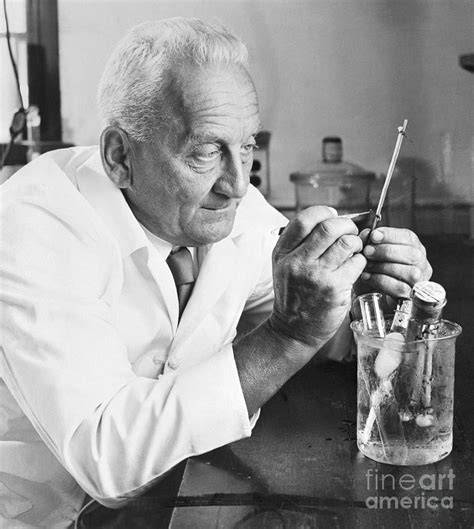
A Cambridge-hez kötődő magyar tudományos hagyomány egyik legismertebb alakja Szent-Györgyi Albert, aki Cambridge-ben szerzett PhD-fokozatot, és később 1937-ben fiziológiai és orvostudományi Nobel-díjat kapott. A Cambridge-i Magyar Társaság pedig olyan közösségi és akadémiai fórumot biztosít, amely összekapcsolja a magyar hallgatókat, kutatókat és a Magyarország iránt érdeklődő cambridge-i egyetemi polgárokat.
Gábor Csányi: számításos kémia, gépi tanulás és anyagmodellezés
Gábor Csányi is a Hungarian-born scientist at the University of Cambridge and a Director of the Max Planck Institute for Polymer Research in Mainz, Germany. He read mathematics in Cambridge as an undergraduate at St. John’s College and did his PhD work in physics at MIT. After postdoctoral research in the Cavendish Laboratory, in 2007 he joined the faculty in the Department of Engineering at Cambridge, from where he moved to the Chemistry Department in 2026.
He won an F. W. Bessel award from the Alexander von Humboldt foundation and was elected to the Fellowship of the Royal Society in 2025. His work is in the field of computational chemistry, and is focused on developing algorithms to predict the properties of materials and molecules from first principles. He pioneered the application of machine learning to molecular modeling which lead to enormous gains in the efficiency of molecular dynamics simulation.
Professional position Professor of Molecular Modelling, Department of Engineering, University of Cambridge. Subject groups Computer Sciences Artificial intelligence, machine learning, vision; Astronomy and Physics Computational physics, Condensed matter incl softmatter, liquids, nano-materials; Chemistry Chemistry, theoretical; Engineering and Materials Science Materials science (incl materials engineering).
| Adat | Információ |
|---|---|
| Cambridge-i intézmény | Department of Engineering; 2026-tól Chemistry Department |
| Szakterület | Computational chemistry, molecular modelling |
| Fő kutatási cél | Anyagok és molekulák tulajdonságainak előrejelzése első elvekből |
| Cambridge-i tanulmányok | Matematika, St. John’s College |
| Doktori képzés | Fizika, MIT |
| Elismerés | F. W. Bessel award; Royal Society Fellowship, 2025 |
Szent-Györgyi Albert cambridge-i kapcsolata
Albert Szent-Györgyi (Budapest, 1893 - Woods Hole, MA, USA, 1986) - Hungarian doctor and biochemist. 1937 Nobel Prize in Physiology or Medicine “for his discoveries concerning biological combustion processes, with special emphasis on vitamin C and the catalysis of fumaric acid”.
Parents: Miklós Szent-Györgyi and Jozefina Lenhossék. After completing his studies at Lónyay Calvinist Secondary School, Szent-Györgyi earned a degree as a medical doctor from the University of Budapest, and then earned a PhD at the University of Cambridge.
He was then a professor at the Ferenc József University in Szeged from 1928-1945, during which time he served as rector of the then Horthy Miklós University from 1940-1941. He was also active in the Hungarian resistance during World War II and entered Hungarian politics after the war.
He was elected to Parliament and helped re-establish the Hungarian Academy of Sciences. In 1947, the political changes in Hungary led Szent-Györgyi to move to Woods Hole in the United States, where he founded the Institute for Muscle Research at the Marine Biology Laboratory.
He is credited with first isolating vitamin C and discovering many of the components and reactions of the citric acid cycle and the molecular basis of muscle contraction. Szent-Györgyi died in Woods Hole and is buried there.
A Cambridge-hez kapcsolódó magyar Nobel-díjasok tudományos háttere
A Cambridge-i kapcsolatot tágabb összefüggésben is érdemes vizsgálni, mivel több magyar származású Nobel-díjas nemzetközi tudományos pályája olyan brit, amerikai vagy kontinentális európai egyetemekhez kapcsolódott, amelyekkel Cambridge szoros tudományos közegben állt. A magyar Nobel-díjasok nemzeti hovatartozása ugyanakkor történelmi és családi szempontból összetett kérdés.
“The question of national affiliation can be quite complicated in a multi-ethnic country such as the Kingdom of Hungary within the Austro-Hungarian Empire, where marriages between people of different nationalities were common. The name of the country itself also depends on the historical context, as Hungary’s borders changed dramatically over the course of the 20th century as a result of the Treaty of Trianon (1920), the Vienna Awards (1938 and 1940) and the Paris Peace Treaty (1947); there were areas that belonged to the motherland at one time and to its neighbours at another.
In many of these regions, members of multiple nationalities lived together and often intermarried. As a result, several Nobel Prize winners (and, of course, other scientists) are today claimed by more than one country and nation as their own.”
György Hevesy
György Hevesy (Budapest, 1885 - Freiburg im Breisgau, Germany, 1966) - Hungarian radiochemist. 1943 Nobel Prize in Chemistry “for his work on the use of isotopes as tracers in the study of chemical processes”.
Hevesy studied at Piarist Secondary School in Budapest, then at universities in Budapest and Berlin, and then earned his PhD in Physics at the University of Freiburg. He became a professor of physical chemistry at the University of Budapest, but in 1920 he moved to Copenhagen, where, in 1922, he discovered (with Dirk Coster) the element hafnium.
He is the father of the isotope tracer principle. By 1943, Copenhagen was no longer a safe place for a Jewish scientist, so Hevesy fled to Sweden, where he worked at Stockholm University until 1961. It was here he began to use radioactive isotopes to study plant and animal metabolism.
Hevesy developed the X-ray fluorescence analysis method and discovered the alpha radiation emitted by samarium. He received the Atoms for Peace Award in 1958 for his contributions to the peaceful application of radioactive isotopes. Hevesy died and was buried in Freiburg. In 2001, at the request of the family, his ashes were moved to the Fiumei Road Cemetery in Budapest.
György Békésy
György Békésy (Budapest, 1899 - Honolulu, HI, USA, 1972) - Hungarian-American biophysicist. 1961 Nobel Prize in Physiology or Medicine “for his discoveries of the physical mechanism of stimulation within the cochlea”.
Parents: Sándor Békésy and Paula Mazaly. Békésy completed his secondary school studies in Constantinople, Budapest and Zurich, and his university studies in Budapest, Munich, Zurich and Bern.
Using stroboscopic photography and a silver powder marker, he was able to observe that the basilar membrane moves as a surface wave in response to sound and that high frequencies produce greater vibration at the base of the cochlea, while low frequencies create more vibration at the apex.
Békésy concluded that his observations demonstrated how different sound wave frequencies are locally dispersed before exciting different nerve fibers that lead from the cochlea to the brain. Between 1923 and 1946, he was employed by the Royal Hungarian Post Office, and from 1947-1966 he worked at Harvard University.
After his laboratory was destroyed by fire in 1965, he was invited to lead a sensory sciences research laboratory in Honolulu. He became a professor at the University of Hawaii in 1966 and died in Honolulu.
Jenő Wigner
Jenő Wigner (Budapest, 1902 - Princeton, NJ, USA, 1995) - Hungarian-American theoretical physicist. 1963 Nobel Prize in Physics (shared with Maria Goeppert Maye and J. Hans D. Jensen) “for his contributions to the theory of the atomic nucleus and the elementary particles, particularly through the discovery and application of fundamental symmetry principles”.
Parents: Antal Wigner and Erzsébet Einhorn. Wigner graduated from the Fasori Lutheran Secondary School in Budapest, and then graduated form the Technical College of Berlin in 1922 and received his PhD in 1925.
From 1937, he was a professor at Princeton University. He worked as an assistant at the Kaiser Wilhelm Institute in Berlin and with David Hilbert at the University of Göttingen. Wigner and Hermann Weyl were responsible for introducing group theory, in particular symmetry theory, into physics.
He also did pioneering work in pure mathematics. Wigner’s theorem is the cornerstone of the mathematical formulation of quantum mechanics. He is also known for his research into the structure of the atomic nucleus.
In 1930, Wigner was hired by Princeton University, together with János Neumann, and moved to the United States, where he became a citizen in 1937. During the Manhattan Project, Wigner’s team was tasked with designing production nuclear reactors that would convert uranium into weapons-grade plutonium.
Wigner and Leonard Eisenbud developed an important general approach to nuclear reactions, the Wigner-Eisenbud R-matrix theory.
Dénes Gábor
Dénes Gábor (Budapest, 1900 - London, 1979) - Hungarian-British physicist and mechanical engineer. 1971 Nobel Prize in Physics “for his invention and development of the holographic method”.
Parents: Bernát Günszberg and Adél Jakobovits. Gábor began his studies in Markó Street Secondary School and then began studying engineering at the Royal Joseph University of Technology in 1918. He then continued his studies in Germany at the Technical College of Berlin.
It was the study of the basic processes of the oscillograph that led Gabor to investigate oscillographs and other electron-beam instruments such as electron microscopes and TV tubes. His research at the British Thomson-Houston Society focused on electron inputs and outputs, leading to the invention of holography in 1947.
Holography was based on electron microscopy and thus used electrons instead of visible light. The earliest visual hologram was not achieved until 1964, following the invention of the laser, the first coherent light source, in 1960.
Gábor became a British citizen in 1946 and spent most of his life in England. In 1948 he took up a post at Imperial College London, where he became a professor of applied physics in 1958 until his retirement in 1967.
His rapid development of lasers and holographic applications in a wide range of fields (for example, art, information storage and pattern recognition) led to him being recognised worldwide. He died in South Kensington, London in 1979.
György Oláh
György Oláh (Budapest, 1927 - Beverly Hills, CA, USA, 2017) - Hungarian-American chemist. 1994 Nobel Prize in Chemistry “for his contribution to carbocation chemistry”.
Parents: Gyula Oláh (Offenberger) and Magdolna Krasznai. Oláh studied at the Piarist Secondary School in Budapest, going on to study organic chemistry at the Technical University of Budapest, where he earned a PhD in chemical engineering and taught organic chemistry from 1949 to 1954.
Between 1954 and 1956, he was Head of the Department of Organic Chemistry and Co-Director of the Research Institute of the Hungarian Academy of Sciences. In 1956, Oláh moved with his family to England and then to Canada, where he joined Dow Chemical in Sarnia, Ontario.
His pioneering work on carbocationics began during his eight years there. In 1965, he returned to academia, becoming a lecturer at Case Western Reserve University in Cleveland. In 1971, he was granted United States citizenship.
He then became a fellow at the University of Southern California, serving there as the Donald P. and Katherine B. Loker Professor of Chemistry from 1980. His research on stable, non-classical carbocations led to the discovery of protonated methane stabilised by superacids such as FSO3H-SbF5 (“magic acid”).
Later in his career, his research on hydrocarbons and their conversion into fuels shifted to methanol production, namely, methanol from methane. Oláh died in 2017 in Beverly Hills, California. In accordance with his will, he was laid to rest at the Fiumei Road Cemetery in Budapest.
János Harsányi
János Harsányi (Budapest, 1920 - Berkeley, CA, USA, 2000) - Hungarian-American economist. 1994 Nobel Prize in Economics shared with John Nash and Reinhard Selten “for their pioneering analysis of equilibria in the theory of non-cooperative games”.
Parents: Károly Harsányi and Alice Gombos. Harsányi studied at the Fasori Lutheran Secondary School in Budapest. In 1939, he enrolled at the University of Lyon to study chemical engineering.
However, the outbreak of the Second World War forced him to return to Hungary, and he graduated in pharmacy from the University of Budapest in 1944. Besides this, he pursued postgraduate studies in philosophy and sociology, obtaining a doctorate in both subjects in 1947.
In 1948, Harsányi emigrated to Austria, and in 1950, to Australia. From 1956 to 1958, he studied at Stanford University on a scholarship, obtaining a PhD in economics and writing his dissertation on game theory.
In 1964, he moved to Berkeley, California, where he taught until his retirement in 1990. Harsányi is best known for his research on game theory and its applications in economics, in particular for his highly innovative analysis of incomplete information games, known as Bayesian games.
He has made significant contributions to the use of game theory and economic reasoning in political and moral philosophy, in particular utilitarian ethics, and to the study of equilibrium selection.
Imre Kertész
Imre Kertész (Budapest, 1929 - Budapest, 2016) - Hungarian author. 2002 Nobel Prize in Literature “for writing that upholds the fragile experience of the individual against the barbaric arbitrariness of history”.
Parents: László Kertész and Aranka Jakab. Kertész attended a boarding school and, in 1940, he started secondary school, where he was put into a special class for Jewish students.
In 1944, at the age of 14, he was deported to the Auschwitz concentration camp, and was later sent to Buchenwald. After his camp was liberated in 1945, Kertész returned to Budapest and graduated from high school in 1948.
Later he lived partly in Hungary and partly in Germany; it was in Germany that he received more active support from publishers and critics, as well as more appreciative readers. His best-known work, Fatelessness (Sorstalanság), describes the experiences of 15-year-old György Köves in the concentration camps of Auschwitz, Buchenwald and Zeitz.
The novel and its sequels, Fiasco (1988) and Kaddis for an Unborn Child (1990), are Holocaust trilogies focusing on the horrors of the 20th century: hatred, genocide and the inhumanity that lies with the human soul. In 2009, Kertész was elected as a member of the Széchenyi Academy of Arts and Letters.
He is buried at the Fiumei Road Cemetery with his wife.
Avram Hershko
Avram Hershko (Ferenc Herskó) (Karcag, 1937) -Hungarian-Israeli biochemist. 2004 Nobel Prize in Chemistry shared with Aaron Ciechanover and Irwin Rose “for the discovery of ubiquitin-mediated protein degradation”.
Parents: Mosche Hershko (Mózes Herskó) and Shoshana Wulcz (Margit Wulcz). Born into a Jewish family, Hershko, his brother and his mother were deported to a ghetto in Szolnok, from where most Jews were sent to Auschwitz, but he and his family managed to board a train that took them to a concentration camp in Austria.
They survived the war and returned home. His father also returned, four years after they had last seen him. Hershko and his family emigrated to Israel in 1950 and settled in Jerusalem.
He received a medical degree in 1965 and a PhD in 1969 from the Hadassah Medical Center of the Hebrew University of Jerusalem. He is currently a distinguished professor at the Technion Rappaport Family Institute for Research in the Medical Sciences in Haifa.
Hershko and his colleagues pioneered the discovery of how cells regulate protein levels by tagging unwanted proteins with the polypeptide ubiquitin.
Ferenc Krausz
Ferenc Krausz (Mór, 1962) - Hungarian-Austrian physicist. 2023 Nobel Prize in Physics shared with Pierre Agostini and Anne L’Huillier “for experimental methods that generate attosecond pulses of light for the study of electron dynamics in matter”.
Magyar kutatók a gépi tanulás és a mesterséges intelligencia területén
Cambridge-en olyan magyar kötődésű kutatók is dolgoznak, akik a gépi tanulás elméleti alapjait, a mélytanulást, a számítógépes látást, a valószínűségi modelleket és az oksági következtetést vizsgálják. E kutatási irányok közös jellemzője, hogy matematikai és statisztikai módszerekkel próbálják megérteni a tanuló rendszerek működését, korlátait és általánosítási képességét.
I'm a machine learning researcher with a particular interest in the fundamentals and…
My research falls into the following themes: Optimization, Generalization and Transferability in Deep Learning: Why do deep networks generalise? What is the role of stochastic gradient descent? What is the role of the (over)parametrization of neural networks? Can we design optimisation algorithms that find better minima? Why does transfer learning work so well in neural networks?
Mathematical Models of Emergent Behaviours: It is clear that notions of statistical generalisation are insufficient to describe the range of "intelligent behaviours" LLMs display: in-context learning, reasoning, extrapolation of rules to unseen data. We need new mathematical models of these behaviours so we can reason about why we see them, and what aspects of training give rise to them.
Unsupervised Representation Learning: What are the hallmarks of good neural representations of data, and how do we discover these from data without labels? How can we formalize the goals and principles of unsupervised representation learning, of self-supervised learning, of transfer learning? Can we understand why self-supervised learning works so well in vision and NLP?
Probabilistic foundations: How should we represent uncertainty about models in deep learning? Is Bayesian inference a good principle for deep learning? Can we develop alternative ways of quantifying uncertainty that line up better with our goal? Can we develop practical inference algorithms in prediction-oriented, loss-calibrated situations?
Causal Inference and Identifiability: The world of causal inference is full of non-identifiability: that certain causal relationships cannot be inferred from observational data alone. However, we see that humans as well as machine learning systems can often recover correct causal information in spite of this limitation.
We study situations where causal relationships are identifiable and the role inductive biases play in identifying causal relationships where data provides insufficient constraints.
Tanulmányok és cambridge-i pálya
I finished my PhD in Machine Learning at the Cambridge University Engineering Department in 2013 focussing on Bayesian inference, nonparametric and kernel methods. I then worked in the London technology sector: in various tech startups and briefly in venture capital.
I served as Principal Research Scientist at deep learning startup Magic Pony Technology, where we focussed on applying deep learning to the problem of lossy image and video compression. Following the acquisition of Magic Pony by Twitter in 2016, I served as Senior Machine Learning Researcher at Twitter where I worked on a range of ML-related projects including computer vision, recommender systems and helped set up Twitter's ML Ethics, Transparency and Accountability (META) team.
I joined the Department of Computer Science and Technology in 2020. Other than my university role, I run AI retreats for high-school students in Hungary, and have set up a scholarship fund for talented students from Ukraine.
Fő oktatási területek
- Theory of Deep Learning (R252) graduate module for Part III CST (4th year undergraduate) and MPhil Advanced Computer Science
- Deep Learning and Neural Networks (DeepNN) Part II CST (3rd year undergraduate)
- Advanced Topics in Machine Learning or Natural Language Processing (R250) graduate module for Part III CST (4th year undergraduate) and MPhil Advanced Computer Science
- Topics: Causal Inference (2021, 2022), AI Safety (2023)
Jelentősebb kutatási témák és publikációk
Cognitive Tomography Reveals Complex, Task-Independent Mental Representations Current Biology, Cell Press October 24, 2013. Humans develop rich mental representations that guide their behavior in a variety of everyday tasks.
Cognitive tomography is a method that estimates these complex prior distributions across different tasks. It is shown that humans have highly structured and idiosyncratic priors over faces. Furthermore, priors for faces are task independent.
Adaptive Bayesian Quantum Tomography Physical Review A May 27, 2012. In this paper we revisit the problem of optimal design of quantum tomographic experiments.
In contrast to previous approaches where an optimal set of measurements is decided in advance of the experiment, we allow for measurements to be adaptively and efficiently reoptimized depending on data collected so far.
We develop an adaptive statistical framework based on Bayesian inference and Shannon's information, and demonstrate a significant reduction in the total number of measurements required as compared to nonadaptive methods, including mutually unbiased bases.
Collaborative Gaussian Processes for Preference Learning NIPS 2012. We present a new model based on Gaussian processes (GPs) for learning pairwise preferences expressed by multiple users.
Inference is simplified by using a preference kernel for GPs which allows us to combine supervised GP learning of user preferences with unsupervised dimensionality reduction for multi-user systems.
The model not only exploits collaborative information from the shared structure in user behavior, but may also incorporate user features if they are available.
Optimally-Weighted Herding is Bayesian Quadrature AISTATS 2012. Herding and kernel herding are deterministic methods of choosing samples which summarise a probability distribution.
A related task is choosing samples for estimating integrals using Bayesian quadrature. We show that the criterion minimised when selecting samples in kernel herding is equivalent to the posterior variance in Bayesian quadrature.
We then show that sequential Bayesian quadrature can be viewed as a weighted version of kernel herding which achieves performance superior to any other weighted herding method.
Photo-Realistic Single Image Super-Resolution Using a Generative Adversarial Network CVPR. Despite the breakthroughs in accuracy and speed of single image super-resolution using faster and deeper convolutional neural networks, one central problem remains largely unsolved: how do we recover the finer texture details when we super-resolve at large upscaling factors?
In this paper, we present SRGAN, a generative adversarial network (GAN) for image superresolution (SR). To our knowledge, it is the first framework capable of inferring photo-realistic natural images for 4× upscaling factors.
To achieve this, we propose a perceptual loss function which consists of an adversarial loss and a content loss. The adversarial loss pushes our solution to the natural image manifold using a discriminator network that is trained to differentiate between the super-resolved images and original photo-realistic images.
Our deep residual network is able to recover photo-realistic textures from heavily downsampled images on public benchmarks. An extensive mean-opinion-score (MOS) test shows hugely significant gains in perceptual quality using SRGAN.
Magyar gazdaság- és társadalomtörténet Cambridge-ben
I am a social and economic historian of Eastern Europe, and my work focuses on state-society relations, everyday economic life, and the popular experience of communist rule.
My PhD considered the social history of the Hungarian forint between the end of the Second World War in 1945 and the consolidation of communist power in the late 1950s.
Specifically, my thesis used various case studies such as the world-record Hungarian hyperinflation of 1945-6, loans, lotteries, state-loans, and taxes to examine the influence of money and its perceived value by ordinary citizens on the state's exercise of power in Hungary between 1945 and 1958.
I obtained my BA degree in History from the Karoli Gaspar University in 2015, my Master's degree in History (Economic and Social History) from the University of Manchester in 2017, my research Master's degree in Social Science Research (Economic and Social History) from the University of Nottingham in 2019, and my PhD in History from the University of Nottingham in 2022.
Before joining Cambridge as an ESRC Postdoctoral Fellow in October 2023, I held a Rosztoczy Postdoctoral Fellowship at the Jordan Center for the Advanced Study of Russia at New York University between January and September 2023.
Currently, I focus on two major projects. First, I am turning my PhD into a monograph titled 'Contesting Money: The Politics of Time, Value, and the Common Good in Postwar Hungary, 1945-1958' for publication with Oxford University Press.
Second, I am developing a new book project on the global history of money in socialism, exploring Eastern Europe's economic and monetary engagement with the Middle East from the 1960s onwards.
Address Faculty of History, West Road, Cambridge, CB3 9EF.
A Cambridge-i Magyar Társaság és az akadémiai közösség
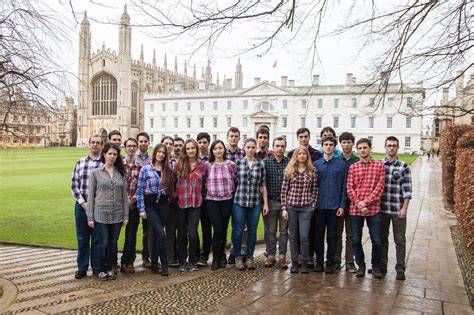
A Cambridge University Hungarian Society a magyar hallgatók és kutatók közösségi, kulturális és szakmai kapcsolatait erősíti. A társaság tevékenységéhez választások, közgyűlések, tudományos és közösségi események, valamint a cambridge-i magyarok érdekképviselete is kapcsolódik.
The CUHS committee met on 13 March 2017 to discuss our activities next term. Minutes of the meeting can be downloaded from this link.
The Annual General Meeting of the Hungarian Society will be on the 28th of February, at 6pm in the OCR, Trinity College. We encourage all members to join - there shall be drinks & snacks provided.
The order of running shall be: 6pm - Hustings - Access Officer - Events Officer - Junior Treasurer - Secretary - President. Each candidate will have 5 minutes to talk about their manifesto, followed by Q&A. After this, anonymous voting shall take place. 7pm - Annual review by the current Committe.
A társaság tisztségei és választásai
- President & Vice-President Marcell Fekete & Attila Szabó
- Secretary András Volford
- Junior Treasurer Dávid Péter Kovács
- Access Officer Iván Merker
- Events Officers Zsófi Belovai & Dávid Farkas
Please find the nominees for the next academic years, and their manifestos below. President Ágnes Szuda and Péter Juhász as Co-presidents. Secretary Attila Szabó. Junior Treasurer Gergely Horváth. Access Marcell Fekete. Events Adrienn Jenei and Vera Upor.
Akadémiai szabadság és Cambridge-Magyarország kapcsolatai
A cambridge-i magyar közösség nemcsak tudományos és kulturális programokban vesz részt, hanem az akadémiai szabadsággal és az egyetemek nemzetközi együttműködésével kapcsolatos kérdésekben is megszólalt. In view of recent developments in Hungary, we feel the need to reiterate our commitment to defending bastions of academic freedom in Europe and beyond.
We strongly condemn the proposed legislation targeting the Central European University (CEU) in Budapest, and the Hungarian Prime Minister’s false allegation levelled against the prestigious institution to the effect that it is “cheating”. CEU lawfully awards both Hungarian and U.S. degrees to students from over 100 countries, and its vibrant international community is part of what makes it a scholarly hub of world-class standing.
As fellow students and researchers of the University of Cambridge, we join the Cambridge University Hungarian Society in voicing our concern about the effect the proposed changes would have on the prospects of aspiring Hungarian scholars returning home.
We also join the local East of England MEP, Alex Mayer, in expressing concern about the actions and rhetoric of Viktor Orbán’s Government, and their implications for current and future university ties between Cambridge and Hungary.
Finally, we would like to express solidarity with CEU students, faculty members and staff affected by the current political climate. We urge the Hungarian National Assembly to abandon the proposed legislation and to begin negotiations with the leadership of CEU, so as to ensure that the university is able to remain a viable contributor to scientific and humanistic discourse within Hungary as well as in the world at large.
Andrew E. Czeizel és a magyar genetikai kutatás nemzetközi jelentősége
Andrew E. Czeizel was a well-known physician and researcher in Hungary, although his scientific work was better recognized abroad. Dr Czeizel was a multi-talented, highly educated physician, scientist, geneticist, professor, public health administrator, writer, researcher of geniuses, family supporter, and much more.
Dr Czeizel authored many publications that appeared in English journals. They included 829 scientific publications, as well as authorship of 29 educational and 17 scientific books. The number of his citations has reached about 19,000; his h-index is 60.
Dr Czeizel was well known for his discovery that periconceptional multivitamin supplementation, including vitamin B9 (folic acid), prevents or reduces the formation of more serious developmental disorders, especially neural tube defects like spina bifida.
One of his key articles was published in the world's most prestigious medical journal, the New England Journal of Medicine, in 1994 and has been cited 2,750 times. He received the Kennedy Foundation International Award for this scientific achievement in 2000; his discovery prevented innumerable birth defects all around the world.
Dr Czeizel was the founder of the Budapest Twin Registry (BTR) in 1970, which offered a unique opportunity for scientific research in Hungary. He and his colleague, Julia Métneki, PhD, demonstrated a causal connection between contraceptive pills containing high dose hormone used in the periconceptional period and the frequency of dizygotic twin births.
The population-based Hungarian Congenital Abnormality Registry (HCAR) also offered a unique opportunity to study relationships between twinning and birth defects. The role of genetic factors was found to be negligible compared to the environmental (teratogenic and maternal) effects in a Hungarian sample of conjoined twins.
Other research focused not only on genetic questions, but on risk factors in twin births. One of his studies assessed the retinopathy associated with premature births, a risk factor of multiple births.
Additionally, his research evaluated the demographic and epidemiological characteristics of multiple births in Hungary. In the 1980s, Dr Czeizel initiated a second, voluntary Adult Twin Registry, recruiting twins with newspaper advertisements and other media.
The availability of these registries also offered possibilities for multiple international collaborations, such as one with the Hamburg Genetic Institute on alcohol consumption, sensitivity and metabolism, and melanoma prevention.
There was also a collaboration with the Hamburg Dermatology Clinic, studying the nevi, and a study on adult lactose intolerance in collaboration with the Hannover Human Genetics Institute.
Some of his twin studies resulted in new findings; for example, he was first in the world to identify the gene for lactose intolerance with the help of German-Hungarian academic collaborations.
His work was much appreciated, given its widespread national and international scientific recognition. Dr Czeizel was a model of the modern scientist.
Regarding his prominence, especially compared to Ignac Semmelweis (the gynecologist who discovered puerperal fever): ‘the former was the savior of mothers; Dr Andrew E. Czeizel was the savior of fetuses’.
tags: #cambridgei #egyetem #magyar #kutatok