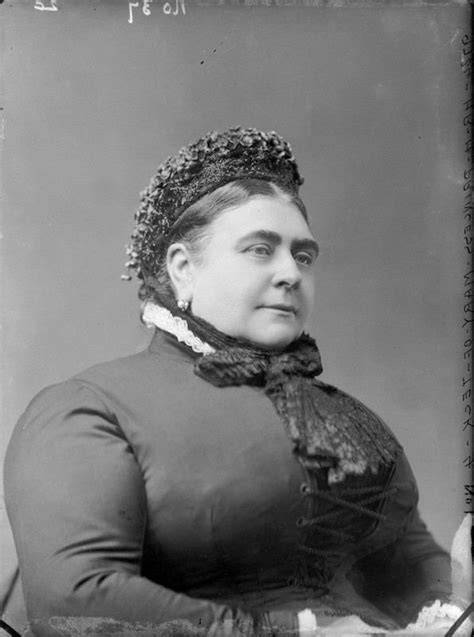
Princess Mary Adelaide of Cambridge (November 27, 1833 - October 27, 1897), later known as the Duchess of Teck, was a member of the British royal family and a first cousin of Queen Victoria of the United Kingdom. She was one of the first royals to patronise a wide range of charities.
Her importance in British royal history is closely connected with her daughter, Princess Victoria Mary of Teck, who became Queen Mary, and with her grandson Albert Frederick Arthur George, later King George VI. Princess Mary Adelaide of Cambridge was the maternal grandmother of George VI.
Származása és családja
Mary Adelaide was born on November 27, 1833 in the Kingdom of Hanover, German Confederation. Her father was Prince Adolphus Frederick, Duke of Cambridge, the youngest surviving son of King George III of the United Kingdom and Charlotte of Mecklenburg-Strelitz.
Prince Adolphus Frederick, Duke of Cambridge served as Viceroy of the Kingdom of Hanover successively on behalf of his elder brothers King George IV and King William IV. Mary Adelaide’s paternal grandmother was Charlotte of Mecklenburg-Strelitz who was born on May 19, 1744.
She was the youngest daughter of Duke Charles Ludwig Friedrich of Mecklenburg, Prince of Mirow (1708-1752), and his wife Princess Elisabeth Albertine of Saxe-Hildburghausen (1713-1761). Mecklenburg-Strelitz was a small north-German duchy in the Holy Roman Empire.
Mary Adelaide’s mother was Princess and Landgravine Augusta of Hesse-Cassel, the daughter of Prince Friedrich of Hesse-Cassel and his wife, Princess Caroline of Nassau-Usingen. Through her father, she was a great-granddaughter of King George II of Great Britain, her grandmother being King George II’s daughter, Princess Mary, who married Landgrave Friedrich II of Hesse-Cassel.
Mary Adelaide’s uncle, her father’s older brother, was the Landgrave Wilhelm IX of Hesse-Cassel. Following the reorganization of the German states during the German Mediatization of 1803, the Landgraviate of Hesse-Cassel was raised to the Electorate of Hesse and Landgrave Wilhelm IX was elevated to Imperial Prince-Elector, taking the title Wilhelm I, Prince-Elector of Hesse.
This entire Cassel branch of the Hesse dynasty gained an upward notch in hierarchy. As a male-line granddaughter of a British monarch, Princess Mary Adelaide of Cambridge, was styled as a British princess with the prefix of Her Royal Highness.
Gyermekkora Hannoverben
The young princess was baptised on January 9, 1834 at Cambridge House, Hanover, by Rev John Ryle Wood, Chaplain to the Duke of Cambridge. Her godmother and paternal aunt Princess Elizabeth, Landgravine of Hesse-Homburg, was the only godparent who was present.
The others were King William IV and Queen Adelaide (her paternal uncle and aunt), Princess Mary, Duchess of Gloucester and Edinburgh (her paternal aunt), Princess Marie of Hesse-Cassel (her maternal aunt) and Princess Marie Luise Charlotte of Hesse-Cassel (her maternal first cousin).
She was named Mary Adelaide Wilhelmina Elizabeth for her aunts and uncle. Because her father was Viceroy of Hanover, Princess Mary Adelaide spent the early years of her life in Hanover.
After the death of King William IV, Princess Mary Adelaide’s first cousin, Princess Alexandrina Victoria of Kent, ascended the throne in 1837 as Queen Victoria of the United Kingdom. However, Salic law prevented Victoria from ascending the throne of Hanover, which instead passed to Prince Ernest Augustus, Duke of Cumberland who became King Ernst August of Hanover.
Thus, the personal union which had existed ever since Prince-Elector Georg Ludwig of Hanover became King George I of Great Britain in 1714 between Britain and Hanover came to an end along with the arrangement of Hanover’s ruler living in England as the British monarch and using a Viceroy to represent him in Hanover.
The Duke of Cumberland moved to Hanover as king and Mary Adelaide’s father, no longer needed in Hanover, returned to London with his family, setting up residence in Kensington Palace.
Házassága a Teck hercegével
The Duke and Duchess of Teck chose to reside in London rather than abroad, mainly because Princess Mary Adelaide received £5,000 per annum as a Parliamentary annuity and carried out royal duties. Her mother, the Duchess of Cambridge, also provided her with supplementary income.
Requests to Queen Victoria for extra funds were generally refused; however, the Queen did provide the Tecks with apartments at Kensington Palace and White Lodge in Richmond Park as a country house. Mary Adelaide requested that her new husband be granted the style Royal Highness, but this was refused by Queen Victoria.
The Queen did, however, promote Francis to the rank of Highness in 1887 in celebration of her Golden Jubilee. This elevation of his style was relevant in the United Kingdom only, and did not effect his status in the German Empire.
Életmód és pénzügyi nehézségek
Despite the couple’s modest income, Mary Adelaide had expensive tastes and lived an extravagant life of parties, expensive food and clothes and holidays abroad. In 1883 they were forced to live more cheaply abroad in order to reduce their debts.
With their children, they travelled to Florence, Italy, and also stayed with relatives in Germany and Austria. Initially, they travelled under the names of the Count and Countess von Hohenstein.
However, Mary Adelaide wished to travel in more style and reverted to her actual title, which commanded significantly more attention and better service.
Jótékonysági tevékenysége
The Tecks returned from their self-imposed exile in 1885 and continued to live at Kensington Palace and White Lodge in Richmond Park. Mary Adelaide began devoting her life to charity, serving as patron to Barnardo’s and other children’s charities.
Jótékonysági szerepvállalása a brit királyi család későbbi hagyományai szempontjából is jelentős volt, mivel a széles körű gyermekvédelmi és társadalmi támogatás a királyi közélet egyik fontos részévé vált.
Lánya, Victoria Mary of Teck házassága
In 1891, Mary Adelaide was keen for her daughter, Princess Victoria Mary of Teck (known as “May”), to marry one of the sons of the Prince of Wales, the future King Edward VII of the United Kingdom.
At the same time, Queen Victoria wanted a British-born bride for the future king, though of course one of royal rank and ancestry, and Mary Adelaide’s daughter fulfilled the rank criteria.
After Queen Victoria’s approval, May became engaged to Prince Albert Victor, Duke of Clarence and Avondale, second in line to the British throne. He died suddenly six weeks later.
Queen Victoria was fond of Princess Mary and persuaded the Duke of Clarence’s brother and next in the line of succession, Prince George, Duke of York, to marry her instead. They married in the Chapel Royal, St James’s Palace, on July 6, 1893.
Halála és temetése
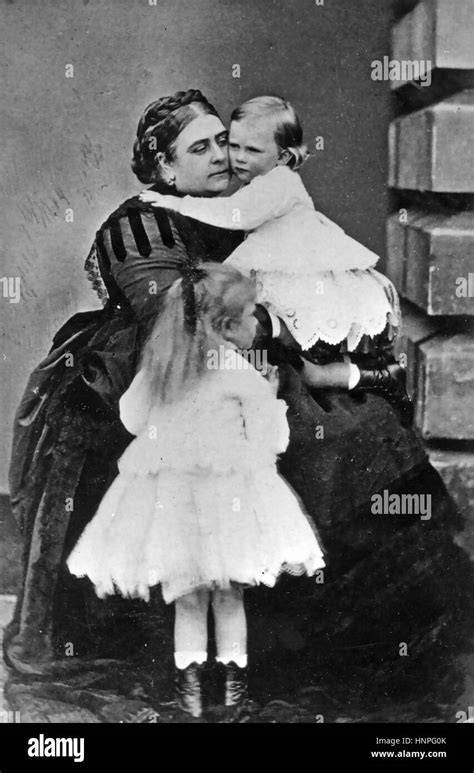
Princess Mary Adelaide never lived to see her daughter become Princess of Wales or Queen, as she died on October 27, 1897 at White Lodge, following an emergency operation.
She was buried on November 3, 1897 in the Royal Vault at St George’s Chapel, Windsor.
Mary Adelaide kapcsolata VI. György királlyal
Princess Mary Adelaide of Cambridge was a daughter of Prince Adolphus Frederick, Duke of Cambridge, the tenth child and seventh son of King George III of the United Kingdom and Queen Charlotte (born a Duchess of Mecklenburg-Strelitz).
Prince Adolphus Frederick was married to Princess and Landgravine Augusta of Hesse-Cassel, third daughter of Prince Friedrich of Hesse-Cassel, and his wife, Princess Caroline of Nassau-Usingen.
Through her father, Princess Augusta of Hesse-Cassel, was a great-granddaughter of King George II of Great Britain, her grandmother being George II’s daughter Princess Mary, the wife of Willem IV, Prince of Orange, the first hereditary stadtholder of all seven provinces of the Northern Netherlands.
This made Princess Mary Adelaide of Cambridge a first cousin to Queen Victoria of the United Kingdom, who was the daughter of her father’s older brother, Prince Edward, Duke of Kent.
Mary Adelaide’s daughter, Princess Victoria Mary of Teck, later became the wife of Prince George, Duke of York, who ascended the throne as King George V. Their son Albert Frederick Arthur George became King George VI.
VI. György király családi háttere
George VI (Albert Frederick Arthur George; December 14, 1895 - February 6, 1952) was King of the United Kingdom of Great Britain and Northern Ireland and the Dominions of the British Commonwealth from December 11, 1936 until his death in 1952.
King George VI was also the last Emperor of India from 1936 until the British Raj was dissolved in August 1947, and the first Head of the Commonwealth following the London Declaration of 1949.
The future George VI was born at York Cottage, on the Sandringham Estate in Norfolk, during the reign of his great-grandmother Queen Victoria of the United Kingdom. His father was Prince George, Duke of York (later King George V), the second and only surviving son of the Prince and Princess of Wales (later King Edward VII and Queen Alexandra, Princess of Denmark).
His mother, Princess Victoria Mary of Teck, the Duchess of York (later Queen Mary), was the eldest child and only daughter of Francis, Duke of Teck, and Princess Mary Adelaide of Cambridge, Duchess of Teck.
| Személy | Kapcsolat |
|---|---|
| Princess Mary Adelaide of Cambridge | VI. György király nagyanyja |
| Princess Victoria Mary of Teck | Mary Adelaide lánya, később Queen Mary |
| Prince George, Duke of York | Victoria Mary férje, később V. György király |
| Albert Frederick Arthur George | Mary Adelaide unokája, később VI. György király |
Albert herceg születése és neve
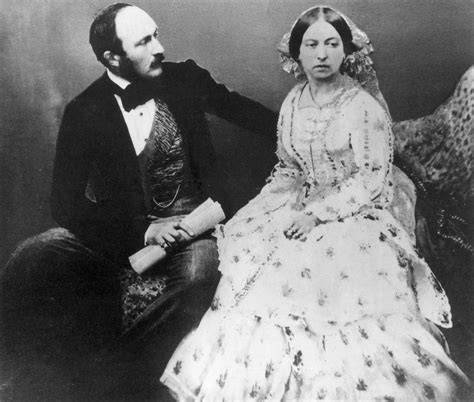
Prince Albert’s birthday, December 14, 1895, was the 34th anniversary of the death of his great-grandfather Albert, Prince Consort, Prince of Saxe-Coburg-Gotha. Uncertain of how the Prince Consort’s widow, Queen Victoria, would take the news of the birth, the Prince of Wales wrote to the Duke of York that the Queen had been “rather distressed”.
Two days later, he wrote again: “I really think it would gratify her if you yourself proposed the name Albert to her.” The Queen was mollified by the proposal to name the new baby Albert, and wrote to the Duchess of York: “I am all impatience to see the new one, born on such a sad day but rather more dear to me, especially as he will be called by that dear name which is a byword for all that is great and good.”
Consequently, he was baptised “Albert Frederick Arthur George” at St Mary Magdalene Church, Sandringham on February 17, 1896. Formally he was His Highness Prince Albert of York; within the royal family he was known informally as “Bertie”.
On May 28, 1898 Queen Victoria issued Letters Patent elevating the styles of the children of the Duke of York (including Prince Albert) from His/Highness to His/Her Royal Highness.
The Duchess of Teck did not like the first name her grandson had been given, and she wrote prophetically that she hoped the last name “may supplant the less favoured one”.
Helye az öröklési sorban
Albert was fourth in line to the throne at birth, after his grandfather, father and elder brother, Prince Edward. His father ascended the throne as King George V in 1910.
As the second son of the king, Albert was not expected to inherit the throne. Prince Albert spent his early life in the shadow of his elder brother, Prince Edward, the heir apparent.
Albert attended naval college as a teenager and served in the Royal Navy and Royal Air Force during the First World War. In 1920, he was made Duke of York.