A traditional food olyan étel, amelyet hagyományos alapanyagok, hagyományos összetétel vagy hagyományos elkészítési és feldolgozási módszer különböztet meg a hasonló termékektől. A hagyományos ételek elkészítési módjai egy ország vagy egy régió folklórjának részét képezik, és gyakran generációról generációra öröklődnek.
A hagyományos ételek fontos szerepet játszanak a különböző kultúrák és régiók életében, mivel nemcsak táplálékot jelentenek, hanem a történelmet, a földrajzi környezetet, a mezőgazdaságot, a vallási szokásokat és a nemzeti identitást is tükrözik. A helyi alapanyagok elérhetősége, az éghajlat és a társadalmi környezet mind hatással vannak arra, hogy egy adott területen milyen ételek alakulnak ki.
What are traditional foods?
The use of particular food ingredients and food preparation methods has been passed on from one generation to the next and are nowadays referred to as “traditional foods”. Traditional foods played a major role in traditions of different cultures and regions for thousands of years including foods that have been consumed locally and regionally for an extended time period.
Traditional food is a food with a specific feature or features which distinguish it clearly from other similar products of the same category in terms of the use of “traditional ingredients” (raw material of primary products) or “traditional composition” or “traditional type of production and /or processing method”. Preparation methods of traditional foods are part of the folklore of a country or a region.
Traditional foods developed a long time ago, and many of them still have their place in healthy diet today, whereas others may not meet nowadays nutritional needs because they are too high in energy or fat. So, it makes sense to modify the nutrient composition of some traditional foods to make them more appropriate for the 21st century.
Factors that influence traditional food
Over time, traditional foods have been influenced by many factors. One of these factors is the availability of raw materials; traditional food is thus influenced by agricultural habits and location.
Regions at a lower altitude, for example, have different vegetation compared to regions at high altitudes; countries without access to the sea usually have a lower availability of fish and seafood compared to those with a large coastal area.
Dietary patterns are influenced by the local availability of foods and the cultural and socioeconomic environment, but there is a trend for transfer and assimilation of new habits between countries.
Hungarian cuisine is a rich tapestry of flavors, history, and cultural influences that have developed over centuries in the heart of Central Europe. Known for its bold use of spices, hearty ingredients, and comforting dishes, traditional Hungarian food reflects the country’s agricultural roots and diverse heritage.
Traditional food and healthy eating
In past period Mediterranean diet which has been shown to be beneficial to health, could function as a model when modifying less favorable compositions of some traditional cuisines, encouraging the use of local ingredients.
It is therefore difficult to draw general conclusions about the health benefits of a certain cuisine or the associated traditional foods. A traditional dish may contain valuable ingredients, but it may also be high in energy, salt or fat.
In the 1960s the diet of Mediterranean populations was characterized by a high consumption of fruits and vegetables, contrary to the low consumption of these foods in Northern European countries.
These large differences seem to be diminishing and contemporary patterns reveal Mediterranean populations straying from their traditional dietary choices, whereas in Northern European countries Mediterranean-style eating has increased in popularity.
A healthy food is low in fat and sugar and is rich in vitamins, protein, minerals and fibres. We should eat fresh food instead of tinned food and semi-prepared food, because they contain additives, colouring materials and preservatives.
Traditional recipes can be adapted by using less fat, more vegetables and fresh ingredients, while keeping their characteristic flavours and preparation methods. Modern versions can also include vegetarian and vegan alternatives.
Hungarian cuisine
Hungarian cuisine is said to be delicious but a bit spicy and fatty. Hungarian people tend to eat a lot of bread.
At the core of Hungarian cuisine is paprika, a vibrant red spice made from ground peppers that ranges from sweet to spicy. It is more than just a seasoning; it is a symbol of Hungarian culinary tradition, bringing depth and warmth to countless dishes.
Alongside paprika, ingredients like onions, garlic, potatoes, and various meats form the foundation of many traditional recipes. Hungarian cuisine is famous for its comforting, rustic meals that are often cooked slowly to develop rich, layered flavors.
These dishes have been passed down through generations and remain staples in Hungarian households.
Gulyás
Perhaps the most famous Hungarian dish, gulyás is a hearty soup or stew made with beef, potatoes, onions, and generous amounts of paprika.
Contrary to many international versions, traditional goulash is more of a soup than a thick stew. It originated as a meal prepared by Hungarian shepherds, cooked over open fires in large cauldrons.
The slow simmering process allows the flavors to meld together beautifully, resulting in a deeply satisfying dish that is both nourishing and aromatic.
Pörkölt
Pörkölt is often confused with goulash but is thicker and more stew-like. It is typically made with beef, pork, chicken, or even game meats, cooked with onions, paprika, and sometimes tomatoes and peppers.
Unlike goulash, pörkölt contains less liquid and is often served with nokedli, small Hungarian dumplings similar to German spaetzle.
Csirkepaprikás
This dish highlights the importance of paprika in Hungarian cooking. Tender chicken is cooked in a creamy paprika-infused sauce, often served with nokedli.
The balance of richness and spice makes it a standout example of traditional Hungarian flavor.
Töltött káposzta
This beloved dish consists of cabbage leaves stuffed with a mixture of ground meat and rice, then simmered in a tangy sauerkraut-based sauce.
It is especially popular during holidays and family gatherings, symbolizing comfort and togetherness.
Halászlé
Halászlé is a spicy fish soup traditionally prepared along the banks of the Danube and Tisza rivers.
Made with freshwater fish such as carp and heavily seasoned with paprika, this dish is known for its vibrant red color and bold flavor.
Each region has its own variation, making it a versatile and culturally significant meal.
Lángos
Lángos is a popular street food made from deep-fried dough, typically topped with sour cream, garlic, and cheese.
Crispy on the outside and soft on the inside, it is a favorite snack at markets and festivals throughout Hungary.
Traditional side dishes
Side dishes in Hungarian cuisine play a crucial role in complementing main courses and enhancing overall flavor combinations. Many of these sides are simple yet deeply satisfying.
- Nokedli: Soft egg dumplings commonly served with stews and sauces.
- Tarhonya: Small egg pasta often toasted and cooked like rice.
- Savanyúság: Pickled vegetables such as cucumbers and peppers that add acidity and balance.
- Krumplipüré: Creamy mashed potatoes, often served with meat dishes.
These accompaniments help create well-rounded meals that are both hearty and flavorful, reflecting Hungary’s agricultural abundance.
Hungarian desserts
Hungarian desserts are known for their richness and intricate preparation methods. Influenced by European baking traditions, these sweets often feature layers, fillings, and delicate textures.
Dobos torte is a classic Hungarian cake made with multiple layers of sponge cake and chocolate buttercream, topped with a caramel layer. It was created in the 19th century and remains a symbol of Hungarian pastry craftsmanship.
Chimney Cake (Kürtőskalács) is made by wrapping dough around a cylindrical spit, baking it over an open flame, and coating it in sugar. The result is a crispy, caramelized exterior and a soft, fluffy interior.
It is often enjoyed at fairs and festivals.
Rétes (Strudel) is a delicate pastry filled with ingredients such as apples, cherries, or sweet cottage cheese. The dough is stretched incredibly thin, resulting in a light and flaky texture.
English cuisine and traditional British food
English food has come a long way in recent years, but the classics remain unchanged, from a West country cream tea to a slap-up English breakfast, guaranteed to set you up for the day.
British cuisine has been influenced by local agriculture, the sea, regional traditions and changing lifestyles. Staple foods such as potatoes, wheat, fish, dairy products and meat have played an important role in shaping British cuisine.
Traditional English dishes include Fish and Chips, Shepherd’s Pie, and the Sunday Roast. British meals have also evolved over time to accommodate modern diets and dietary alternatives.
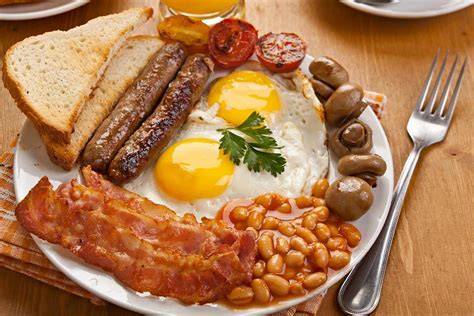
Full English Breakfast
There’s no better way to start the day than with a full English fry-up; bacon, sausages, eggs, fried bread, baked beans, tomatoes, mushrooms, black pudding - and mugs of strong tea.
Available everywhere - increasingly there are good veggie and vegan options too. Clean your plate and you won’t need any lunch!
Fish and Chips
Still a national favourite, usually battered cod or haddock, set on top of a pile of deep-fried chips, smothered in salt and vinegar.
Served up by countless fish & chip shops, also known as ‘chippies’, up and down the country. Best eaten straight from the paper, preferably in front of a sea view.
Sunday Roast
The ultimate weekend treat, pubs up and down the country will serve a traditional roast lunch; usually a choice of beef, lamb or chicken, and a veggie option, with roast potatoes, Yorkshire puddings, vegetables and a thick, unctuous gravy.
Yorkshire Pudding
Made with eggs, flour and milk, and baked at a very high temperature, fluffy golden Yorkshire Puddings were originally served with gravy made from meat drippings as a first course to fill diners up so they would eat less meat afterwards.
Today they are a fixture of a Sunday roast.
Shepherd’s Pie
Shepherd’s Pie evolved to make use of the beef or lamb leftover from a Sunday Roast, and it still is, although mostly it’s made with fresh minced beef, along with onion, peas, carrots and gravy, then topped with mashed potatoes.
The vegetarian version often uses tofu and walnuts.
Bangers and Mash
Sausages, mashed potatoes and onion gravy, and a side of peas is the ultimate pub grub comfort food.
During World War I, water and other fillers were added to sausages to make up for meat shortages - which caused them when cooked to explode with a bang.
Toad in the Hole
Sausages are a staple British food - often served simply with mash and gravy - but this dish surrounds them with Yorkshire pudding - a crispy batter.
The English do have a knack for funny names - this one comes from the relatively small piece of meat ‘the toad’ hiding in the golden batter.
Lancashire Hot Pot
Lancashire gave England its classic lamb casserole, a ‘hotchpotch’, hence Hot Pot, of chunks of stewing lamb, and often lamb’s kidneys, mixed with onions, carrots, and Worcestershire sauce and topped with sliced potatoes and meat drippings, and baked in the oven until it melts in the mouth.
Cornish Pasties
Invented for Cornish tin miners unable to surface for lunch, traditional pasties combine diced beef, onion, swede, or rutabaga, and carrots, encased in thick pastry, and are best eaten hot from the bakers.
Other flavours - including veggie and vegan - can be found, but traditional is the best.
Ploughman’s Lunch
Often seen on pub menus, this is a great sharing plate; an open sandwich of crusty bread, complimented with a hunk of cheddar cheese, butter, pickle, which is usually some kind of chutney, and slices of apple.
More elaborate versions may include ham, hardboiled egg, or pâté.
Prawn Cocktail
A favourite starter since the 1970’s, de-shelled prawns are slathered in a tangy, pink Marie Rose sauce made of mayonnaise, ketchup, Worcestershire sauce, lemon juice and horseradish, served in a cocktail glass on a bed of lettuce with brown bread and butter on the side.
Scotch Egg
The ultimate bar snack and picnic food, the Scotch Egg has become something of a gastro treat in recent years; a hard-boiled egg, wrapped in sausage meat and breadcrumbs and deep-fried.
In spite of their name, they aren’t Scottish: they are named after William Scott, the Yorkshire firm that invented them.
Black Pudding
That little black disc that often appears with your full English breakfast is a dense, highly-flavoured sausage made of pork and beef blood mixed with fat or suet, oatmeal, or oat or barley groats.
Stornoway black pudding from Scotland’s Western Isles is the best of the best.
Steak and Kidney Pie
Pub grub at its heartiest: diced beef, kidneys and onion and sometimes mushrooms and carrots, cooked together in a rich gravy and topped with a lid of flaky puff pastry.
Crack it open and get a full face of steam and heavenly aroma - perfect on a cold winter’s day.
British desserts and drinks
English Breakfast Tea
Queen Victoria made tea a thing after trying a cuppa in 1892 in Balmoral, and her subjects duly followed suit.
Foreigners struggle to understand the Brit’s addiction to this comforting brew, but the secret’s in the water. Hard water is needed to extract the rich flavour of the tea - hence why the same drink can taste completely different in other places.
Brits serve it with a splash of milk, and usually a spoon of sugar.
Scones with Jam and Cream
A scone is slightly sweet pastry, speckled with currants or raisins. Ideally, eat your scones warm from the oven, cut open and smothered in jam and clotted cream, along with a nice cup of tea.
Going to Devon and Cornwall means heading out for a cream tea, starring their famous clotted cream with scones and jam.
Bread and Butter Pudding
Stale white bread never goes to waste with this beloved dessert. Generously buttered slices of bread are mixed with raisins or other dried fruit and topped with egg custard, double cream, vanilla, spices, and sugar, then baked until golden.
It’s delicious served warm with a dollop of cream or custard.
Christmas Pudding
Traditionally made weeks before the holiday, when every member of the family should have a stir for good luck, Christmas Pudding consists of dried fruit, suet, black treacle, spices and alcohol, usually brandy.
On Christmas day, it is steamed for hours, then set alight, and served with brandy butter.
Trifle
There are many versions of this 16th-century English dessert, but the essentials are a base of sponge cake soaked in sherry, topped with fresh fruit or jelly then crowned with custard or whipped cream.
In 2022, a trifle recipe was chosen as the Platinum Pudding for the Queen’s Jubilee.
Sticky Toffee Pudding
This exceedingly sticky pudding is a rich sponge cake made with dates and black treacle, baked in individual tins, then smothered in a hot gooey toffee sauce made of double cream, muscovado sugar, butter and treacle.
Victoria Sponge
Victoria Sponge is a traditional British cake associated with afternoon tea and home baking. It is usually made from sponge cake layers with a sweet filling.
Traditional food and regional identity
Traditional Hungarian food is more than just nourishment; it is a reflection of the country’s history, geography, and cultural identity.
Many recipes have been preserved over generations, connecting modern Hungarians with their ancestors. Meals are often enjoyed in a communal setting, emphasizing hospitality and togetherness.
Whether it is a Sunday family lunch or a festive holiday gathering, food plays a central role in bringing people together.
Hungary’s location in Central Europe has also influenced its cuisine, incorporating elements from neighboring countries while maintaining its unique character.
This blend of influences makes Hungarian food both distinctive and universally appealing.
In Serbia traditional food is consuming in ordinary life days, but also on some celebrations, occasions such as “Slava” and usually some of it are connected with eating season of some vegetables, or time of year winter or summer.
In different regions of Serbia there are differences in eating habits and traditional food frequency. In Vojvodina for example, saturated fatty acids are much more frequent in food in general, because of swine meat and swine products, while in central Serbia and on the South of Serbia boiled and fried vegetables such as tomato and pepper components of food named “ajvar” is more frequent.
Migrations which were present in past 20 years in Serbia and ex Yugoslavia also influenced in changing habits locally.
Traditional food and ethnic food
Despite traditional food, ethnic food is food from countries other than the home market contributing to a different food culture than the traditional cuisine of the host country.
The food may be adopted by combining local and imported ingredients and is prepared at home.
Ethnic groups form a significant part in European countries. Inequalities in health status of many ethnic minority populations compared with the general populations have been widely reported together with differences between individual ethnic minority groups.
Contributory factors might include genetic susceptibility and poor socioeconomic status as well as lifestyle factors, including diet.
Information on dietary habits of ethnic groups and the composition on the food that they consume is important so that targeted dietary advice can be given to vulnerable groups.
There is also interest in the composition of ethnic foods in terms of the presence of bioactive compounds with putative health benefits.
In addition, the multicultural nature of European populations together with increased travel and the globalization of the food supply, has led to an increase in the consumption of ethnic-style foods, referred to as “modified ethnic foods”.
Globalisation and the future of traditional foods
Because of the increasing globalization and internationalization of the food market, many traditional foods are at risk of disappearing.
The documentation of traditional foods and dishes is essential for sustaining traditional foods, which are an important part of cultural heritage.
We have probably all tried at least one dish that doesn't belong to our home country, and in most cases we ended up liking it, wondering whether there was going to be anything else we might like to eat from around the world.
Contemporary food culture is influenced by travel, migration, international restaurants and the global food market. As a result, traditional dishes may be prepared with new ingredients or adapted to different dietary preferences.
Traditional Hungarian food continues to captivate food lovers around the world. Its emphasis on quality ingredients, careful preparation, and bold seasoning ensures that every meal is both memorable and deeply satisfying.
Personal eating habits and cooking
The main meals are breakfast, lunch and dinner or supper, while supper is a cold meal.
For breakfast, people tend to eat muesli with milk or yoghurt, cereals with milk or yoghurt, toast with butter and jam or marmalade, hard- or soft-boiled eggs, fried eggs, scrambled eggs, ham and eggs, bacon and eggs.
They drink some tea, water, milk, white coffee or cocoa. Lunch usually consists of 2 or 3 courses: some soup and a second course which can be a meat dish, pasta or some vegetable souce.
For dinner, people eat some leftovers from lunch or some sandwiches.
My favourite dishes are fish, tomato soup, gyros, potatoes, lasagne, salads and pancakes, but I can’t stand sorrel, chicken legs and pea sauce.
I like breaded meat, vegetable dishes, stuffed cabbage, and chicken paprika with dumplings the most. My absolute favorite dish is pancakes with marmalade or chocolate sauce.
It’s very simple to make an omelet or chips, which means French fries. I know all the ingredients and how to prepare breaded fried meat, chicken stew, and lasagne.
My mum taught me how to make broth, all you need is some red meat, carrots, turnips, celery, kohlrabis, salt, pepper, and onions.
When it’s time to move away from my parent’s house, I would like to be able to prepare my own food. If I don’t want to eat takeaway or pre-packed food, I will have to learn how to make some simple dishes.
In September I hope to go to university, so I think I will ask my mum to show me how to make some of my favorite dishes and I will get some cookery books to survive the first couple of months.
Fast food and pre-packaged meals
I think pre-packed meals and take-away food can be really useful when you don’t have time for cooking or you can’t cook at all.
The easiest and fastest way of saving you from starving is to prepare an instant soup or a deep-frozen pizza.
If I have a lot to study and I don’t have time to make something for myself then I order some pizza or a hamburger.
When I go out with my friends sometimes we just drop in a fast food restaurant to have a quick meal.
I usually try to avoid going to fast food restaurants because I think the food I get there is quite unhealthy.
On weekdays I have to eat out because I don’t have enough time to go home before trainings. I prefer ordinary restaurants to fast food restaurants.
At an ordinary restaurant the food is better quality, waiters serve you and in some restaurants there is a special atmosphere.
At a fast food restaurant there is self-service, so it is fast, the meal is cheaper, but fast food is said to be junk food.
Possible questions at the oral exam
- What is traditional food?
- What are the most famous traditional Hungarian dishes?
- What is Hungarian cuisine like?
- Which ingredients are typical of Hungarian cooking?
- What is your favourite traditional dish?
- What can you cook?
- Why is it useful to know how to cook?
- What are the main meals of the day?
- What do people usually eat for breakfast, lunch and dinner?
- What is a healthy diet like?
- What is your opinion about fast food and pre-packaged meals?
- How has globalisation influenced traditional food?
- What is the difference between traditional food and ethnic food?
- What traditional British dishes do you know?
- How can traditional recipes be made healthier?
Useful vocabulary
| English | Magyar |
|---|---|
| traditional food | hagyományos étel |
| traditional cuisine | hagyományos konyha |
| ingredient | összetevő, hozzávaló |
| recipe | recept |
| preparation method | elkészítési mód |
| healthy diet | egészséges étrend |
| stew | ragu, pörkölt |
| turnip | fehérrépa |
| celery | zeller |
| kohlrabi | karalábé |
| takeaway | elvihető étel |
| pre-packed meal | előre csomagolt étel |
| fast food restaurant | gyorsétterem |
| vegetarian | vegetáriánus |
| fibre | rost |
| preservative | tartósítószer |
| stuffed cabbage | töltött káposzta |
| chicken paprikash | paprikás csirke |
| dumplings | galuska, nokedli |
| fish soup | halászlé |
tags: #traditional #food #angol #erettsegi